


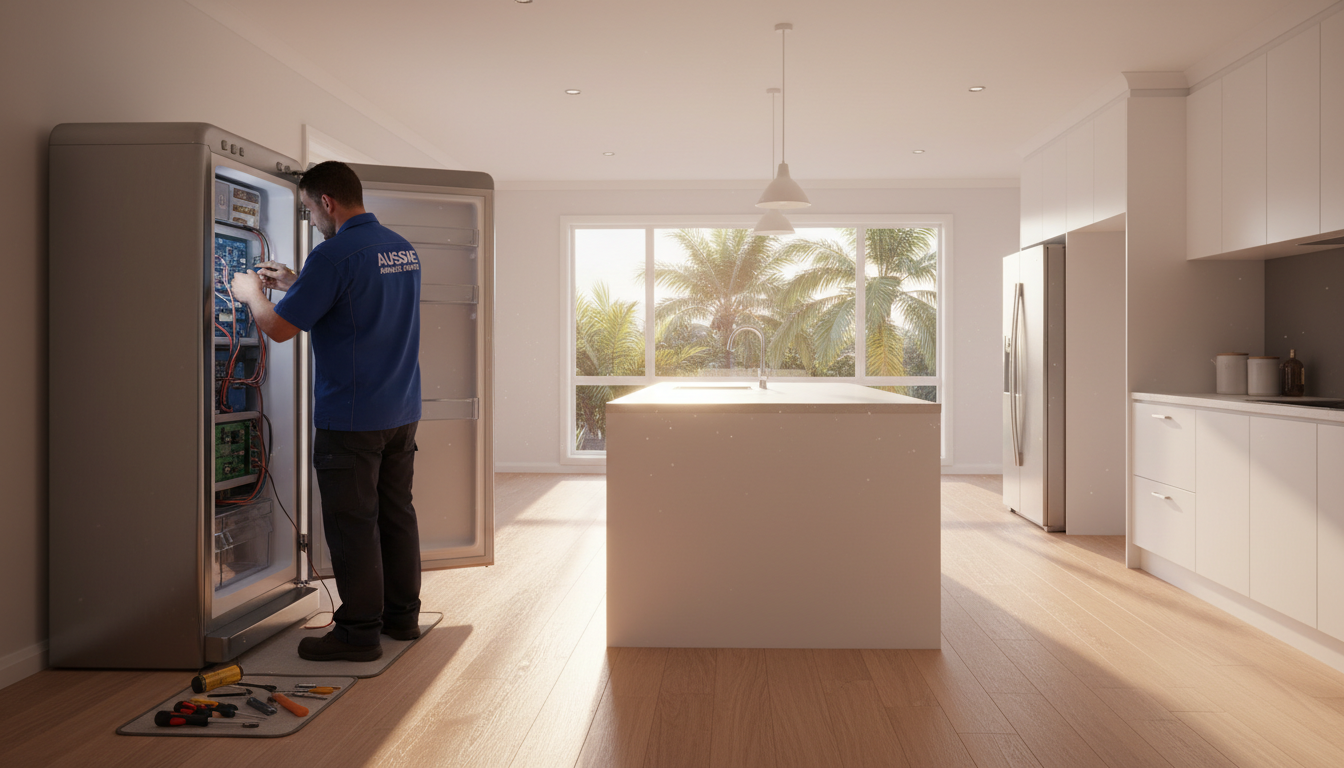
When shopping for affordable appliances in Queensland, factory seconds offer genuine savings on brand new stock with minor cosmetic imperfections. However, the risks buying factory seconds appliances are real if you don’t understand warranty coverage, grading systems, or your consumer rights. This guide explains the hidden pitfalls Queensland buyers face and how to avoid them when purchasing factory seconds from retailers across South East Queensland.
Factory seconds can deliver exceptional value, but only when you know what to inspect, which questions to ask, and how Australian Consumer Law protects you even when cosmetic damage exists. Understanding these risks helps you access the benefits of purchasing factory seconds without compromising on performance or statutory warranty protection.
Factory seconds are brand new appliances that never reached retail showroom floors due to minor cosmetic imperfections sustained during manufacturing, warehousing, or transport. These imperfections typically include carton damage, small dents, scratches on side panels, or packaging tears that don’t affect the appliance’s internal components or operational performance.
The risks exist because not all retailers clearly explain what “factory seconds” means, how grading systems work, or which warranty coverage applies. According to the Australian Competition and Consumer Commission (ACCC), consumer guarantees under Australian Consumer Law apply to all goods sold in Australia, including factory seconds, with mandatory statutory warranties covering acceptable quality and fitness for purpose regardless of cosmetic condition. Yet many Queensland buyers assume factory seconds have reduced warranty protection or compromised performance, leading to confusion and missed opportunities for genuine savings.
Understanding the difference between refurbished and factory seconds is the first step in avoiding these risks. Factory seconds have never been installed, used, or returned by customers, unlike refurbished stock which has been previously operated and repaired.
The most significant risk when buying factory seconds is assuming you forfeit warranty protection because of cosmetic damage. This is incorrect. Under Australian Consumer Law (ACL) Schedule 2 of the Competition and Consumer Act 2010 (Cth), all appliances sold in Australia must meet mandatory statutory warranties including acceptable quality, fitness for purpose, and correspondence with description. These rights apply equally to factory seconds, regardless of dents or scratches.
However, manufacturer warranties may differ from statutory warranties. Some manufacturers offer reduced warranty periods on factory seconds (such as 6 months instead of 12 months), while others honour full manufacturer warranty coverage. Always ask the retailer to clarify in writing which warranty applies: manufacturer warranty, retailer warranty, or both. Your ACL rights remain regardless of what the manufacturer offers.
For detailed guidance on how warranty protection works with factory seconds stock, review our comprehensive guide on warranty coverage on factory seconds which explains the interaction between statutory warranties and manufacturer terms.
Many Queensland buyers use the terms “factory seconds,” “refurbished,” and “second-hand” interchangeably, but these categories have distinct meanings with different warranty and condition implications.
| Stock Type | Condition | Previous Use | Typical Warranty |
|---|---|---|---|
| Factory Seconds | Brand new with minor cosmetic damage (dents, scratches, carton damage) | Never installed or operated | Full or partial manufacturer warranty plus ACL statutory warranties |
| Refurbished | Previously used, returned, repaired, and tested | Previously installed and operated in a home or showroom | Retailer warranty (typically 3-12 months) plus ACL statutory warranties |
| Second-Hand | Previously owned and used, sold as-is | Extended previous ownership and operation | ACL statutory warranties apply but expectations adjusted for age and condition |
Factory seconds retain the most value because they’re brand new appliances with intact internal components, energy efficiency ratings, and modern features. Refurbished stock has been used and repaired, which may affect long-term reliability even after testing. Second-hand appliances carry the highest risk due to unknown usage history and wear on components like compressors, heating elements, and electronic controls.
Reputable retailers like Smart Electrical clearly grade factory seconds stock (A-grade for carton damage only, B-grade for minor cosmetic imperfections) and separate this inventory from refurbished or second-hand categories. Always confirm which category you’re purchasing from before committing.
One of the most common common mistakes when buying factory second fridges is failing to inspect the appliance in person before purchase. While cosmetic damage is expected, you must verify that this damage doesn’t affect functionality.
For refrigerators, inspect these critical areas:
For washing machines, focus on these inspection points:
Never purchase a factory second appliance without requesting a demonstration of core functions. Reputable retailers allow in-store testing and provide transparent access to all appliances before sale.
Factory seconds deliver upfront savings, but these savings disappear quickly if you purchase an appliance with poor energy efficiency. Energy Rating Australia reports that appliances account for approximately 30 percent of household energy use in Queensland, making energy star ratings critical even when purchasing discounted factory seconds to avoid higher long-term running costs.
Under Energy Efficiency Labelling requirements under the Greenhouse and Energy Minimum Standards Act 2012 (Cth), all new appliances sold in Australia must display an Energy Rating label showing star rating (1 to 10 stars) and annual energy consumption in kilowatt-hours (kWh). Factory seconds must have this label intact and legible, with the same energy rating as retail stock because internal components are identical.
When comparing factory seconds, prioritise models with higher star ratings and lower annual kWh consumption. A factory second fridge with a 4-star rating and minor dent delivers better long-term value than a 2-star model at a similar discount. Check the Energy Rating label against the model number in the Energy Rating Australia database to verify accuracy.
For guidance on selecting energy-efficient factory seconds options that balance upfront savings with low running costs, review models from brands like LG, Samsung, and Electrolux which consistently achieve high energy star ratings across their refrigerator and washing machine ranges.
Not all factory seconds retailers use transparent grading systems, leaving buyers uncertain about the extent of cosmetic damage and which warranty applies. Without clear grading, you risk purchasing B-grade stock (visible scratches, multiple dents) when you expected A-grade condition (carton damage only, appliance surface pristine).
A reliable grading system typically includes:
Ask the retailer to explain their grading system in writing before purchase, and request photos of the specific appliance you’re buying if ordering online. Avoid retailers who describe all stock generically as “factory seconds” without specifying grade or condition details.
When purchased from reputable retailers with transparent grading and testing processes, affordable factory seconds deliver substantial benefits for Queensland households.
The primary benefit is cost savings without compromising performance. Factory seconds typically sell for 20 to 40 percent less than identical retail models, yet deliver the same cooling capacity, wash performance, energy efficiency, and feature set. A Samsung refrigerator with a small dent on the side panel cools food identically to the showroom model, but costs significantly less.
Factory seconds also provide access to premium brands and features that might otherwise exceed your budget. A factory second LG washing machine with inverter motor technology and 8-star energy rating may cost less than a brand new budget model with conventional motor and 3-star rating, delivering better long-term value through lower electricity consumption and quieter operation.
Environmental benefits also matter. Purchasing factory seconds prevents functional appliances from being scrapped due to minor cosmetic imperfections, reducing manufacturing waste and the environmental impact of producing replacement units. For a balanced perspective on value and considerations, review the pros and cons of factory seconds when making your purchasing decision.
A systematic inspection process protects you from purchasing factory seconds with functional defects disguised as cosmetic damage. Follow this practical pre-purchase checklist when evaluating any factory second appliance:
This systematic approach ensures you purchase factory seconds with confidence, knowing the cosmetic damage is truly superficial and won’t affect the appliance’s performance or longevity.
Smart Electrical operates factory seconds clearance outlets across South East Queensland at Mt Ommaney (Mount Ommaney Centre), Capalaba (Capalaba Central), Strathpine (Strathpine Centre), and Helensvale (Westfield Helensvale), with a transparent grading system that helps buyers understand exactly what they’re purchasing.
Every appliance is tested before sale to verify core functions operate correctly. Refrigerators are powered on to confirm compressor operation and temperature control. Washing machines are tested through multiple cycles to verify drum balance, water fill, and spin performance. Ovens are heated to verify element function and temperature accuracy. This testing process ensures cosmetic damage hasn’t affected internal components.
Smart Electrical clearly grades all factory seconds stock (A-grade, B-grade, carton damaged) and displays this grading alongside each appliance with photos showing the specific cosmetic imperfections. This transparency allows buyers to make informed decisions based on their tolerance for visible marks versus budget constraints.
Warranty information is provided in writing at point of sale, specifying whether manufacturer warranty applies (and for how long) or whether Smart Electrical retailer warranty covers the appliance. All warranty documentation includes a clear statement of consumer rights under Australian Consumer Law, ensuring buyers understand their statutory protections regardless of cosmetic condition.
For buyers who want to verify due diligence practices, review what smart Brisbane shoppers check before buying to understand the inspection and verification steps that protect Queensland consumers when purchasing factory seconds appliances.
Browse Smart Electrical’s graded factory seconds range online with clear warranty information and energy ratings for every appliance.
All stock tested, graded, and backed by warranty. Shop in-store across South East Queensland or order online.
Yes. Under Australian Consumer Law (ACL) Schedule 2 of the Competition and Consumer Act 2010 (Cth), factory seconds must meet mandatory statutory warranties including fitness for purpose and acceptable quality. The Australian Competition and Consumer Commission (ACCC) confirms these rights apply regardless of cosmetic imperfections, though specific manufacturer warranties may vary by retailer and product condition.
Factory seconds are brand new appliances with minor cosmetic damage (dents, scratches, carton damage) that never reached retail shelves, while refurbished appliances have been previously used, returned, repaired, and tested. Factory seconds typically retain more of their original manufacturer warranty coverage and have never been installed or operated in a home.
Yes. The Queensland Office of Fair Trading enforces mandatory statutory warranties under ACL that require appliances to be of acceptable quality and fit for purpose. If a factory second appliance has a major failure (safety issue, unusable, significantly different from description), you’re entitled to a refund or replacement regardless of cosmetic grading.
No. Factory seconds have identical internal components and energy ratings to brand new models. Energy Efficiency Labelling requirements under the Greenhouse and Energy Minimum Standards Act 2012 (Cth) apply equally to factory seconds, and Energy Rating Australia labels must display the same star rating and annual energy consumption as retail stock.
Inspect door seals and hinges, test all buttons and digital displays, verify the compressor runs quietly (fridges) or drum spins smoothly (washing machines), check for dents that might affect door closure, and confirm the Energy Rating label matches the model specifications. Always request a demonstration of core functions before purchase.

ATOZ 2020 PTY LTD T/A Smart Electrical Clearance Outlet Brisbane
South East Queensland’s Largest Appliance Clearance Outlet for LG, Samsung, Hisense, Westinghouse, Fisher & Paykel, Electrolux, Haier, TCL, Toshiba, AEG and ChiQ
© 2026 SMART ELECTRICAL OUTLET BRISBANE | ATOZ 2020 Pty Ltd
Smart Electrical Brown Plains – GRAND PLAZA (Near Kmart)
A: Shop G105/27-49 Browns Plains Rd, Browns Plains QLD 4118
P: (07) 3800 1013
E: **@**********om.au
Smart Electrical Mt Ommaney – Mount Ommaney Centre (Near JB HI FI and Best & Less)
A: Shop 56/171 Dandenong Rd, Mount Ommaney QLD 4074
P: (07) 3376 7445
P: 0451 068 031 (Temporary Store Phone)
E: **@**********om.au
Smart Electrical Capalaba – CAPALABA CENTRAL (Near Pacific Smiles Dental at the BIG W Entrance)
A: Shop 50-51/38/62 Moreton Bay Rd, Capalaba QLD 4157
P: (07) 3823 4165
E: **@**********om.au
Smart Electrical Strathpine – STRATHPINE CENTRE (Near Target)
A: Shop 148/295 Gympie Rd, Strathpine QLD 4500
P: 0451 729 237
E: **@**********om.au
HELENSVALE SMART ELECTRICAL (Westfield Helensvale)
A: 1, Shop 1058/29 Millaroo Dr, Helensvale QLD 4212
P: 0461 322 434
E: **@**********om.au
Mon – Fri: 9:00 AM – 5:00 PM
Thu: 9:00AM – 8:00PM
Sat: 9:00 AM – 4:30PM
Sun: 10:00 AM – 4:00 PM
Opening times may vary store to store, please check with the individual Smart Electrical Clearanace Outlet Stores Locations for exact opening times.


© 2026 Smart Electrical Outlet. | Terms & Conditions | Privacy Policy | All Rights Reserved | Website by SWE
Sign up to the Smart Electrical newsletter and receive a $10 store coupon for your next purchase.

 | Thank you for Signing Up |


