


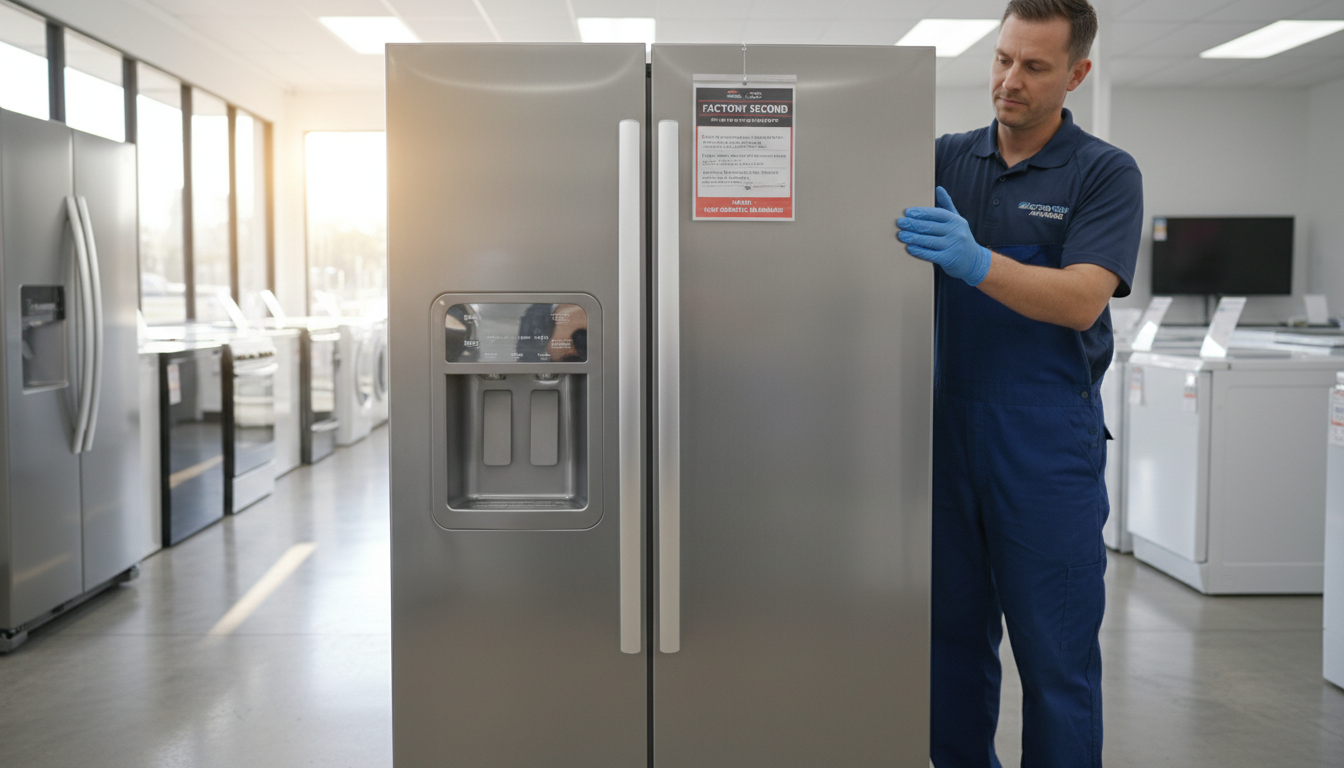
Buying a factory second fridge can save Queensland households hundreds of dollars without compromising on quality or functionality. These brand new appliances carry minor cosmetic imperfections from manufacturing or transport but deliver the same cooling performance as full-price models. Understanding the benefits of purchasing a factory seconds fridge is one thing, but knowing exactly what to inspect before you commit your money is what separates a smart purchase from a potential headache. This guide walks you through the specific checks that protect your investment and ensure you’re getting genuine value from your cheap fridge purchase.
Before you start inspecting, you need to understand exactly what you’re buying. A factory second fridge is a brand new appliance that has never been used by a consumer. These fridges typically have minor cosmetic damage such as scratches, dents, or packaging damage that occurred during manufacturing, warehousing, or transport. The cooling system, compressor, and all functional components are identical to full-price models.
Refurbished fridges are previously owned appliances that have been returned, repaired if necessary, tested, and restored to working condition. These have been used in homes and may have wear beyond cosmetic issues. Second-hand fridges are used appliances sold as-is, often without warranty coverage or professional testing.
The distinction matters because factory seconds offer the best value proposition for Queensland buyers. You’re getting brand new technology, full functionality, and warranty coverage at a significant discount. Understanding what to look for when buying fridges in Brisbane helps clarify these important differences.
Factory seconds are graded based on the extent and visibility of cosmetic damage. A-grade factory seconds have minimal imperfections, often on rear or side panels that won’t be visible once installed. B-grade units may have more noticeable scratches or dents on front-facing surfaces. While all factory seconds at reputable retailers like Smart Electrical are tested for functionality before sale, your personal inspection confirms the cosmetic grading matches your expectations and verifies that all components work as specified.
This inspection process protects you in two ways. First, it ensures you’re comfortable with the cosmetic condition before committing to purchase. Second, it documents the fridge’s condition at point of sale, which matters if you need to make a warranty claim later. The Australian Competition and Consumer Commission (ACCC) reports that consumer guarantee claims for major appliances including refrigerators are among the most common, highlighting the importance of understanding your rights under Australian Consumer Law before purchasing factory seconds.
Start your inspection by examining all exterior surfaces in good lighting. Look at doors, side panels, top surfaces, and handles. Cosmetic damage includes surface scratches, minor dents that don’t affect door alignment, scuff marks, or paint chips. These imperfections are why the fridge is discounted but don’t impact functionality.
Structural issues are different and should raise concerns. Deep dents that affect door closure, cracks in plastic components, bent hinges, or damage to door seals indicate potential functional problems. Check that all doors open and close smoothly without resistance. French door and side-by-side models should have even gaps between doors when closed. Bottom mount fridges should have freezer drawers that slide smoothly on their runners.
Pay particular attention to corners and edges where transport damage typically occurs. Minor cosmetic damage here is normal for factory seconds. However, if you see damage to the refrigerant lines (thin copper or aluminium tubes visible at the rear), walk away. Refrigerant system damage affects cooling performance and can be expensive to repair.
Open all doors and drawers to inspect interior components. Check that all shelves, crisper bins, door storage compartments, and drawers are present and undamaged. Glass shelves should be free from cracks or chips. Plastic bins should close properly without cracks that could leak.
Door seals are critical for energy efficiency and cooling performance. Run your hand around the entire perimeter of each door seal. The rubber should be supple, not brittle or cracked. Close the door on a piece of paper and try to pull it out. You should feel resistance all the way around the door. If the paper slides out easily at any point, the seal may not be creating an airtight closure.
For models with ice makers or water dispensers, verify these components are present and undamaged. Ask the retailer whether these features have been tested. Some factory seconds may have cosmetic damage to dispenser panels that doesn’t affect functionality.
Check the interior lighting by opening doors. LED lights should illuminate immediately. If lights flicker or don’t work, this could indicate an electrical issue rather than just cosmetic damage.
Every fridge sold in Australia must display an Energy Rating Label under the Greenhouse and Energy Minimum Standards Act 2012 (Cth). This label shows the star rating and estimated annual energy consumption in kilowatt-hours. Verify that the label is intact, legible, and matches the model number on the fridge.
Energy Rating Australia administers the labelling scheme and provides comparison data. A 4-star rated fridge typically uses 300-400 kWh annually, while a 2-star model might use 500-600 kWh. At Queensland’s average electricity rates, this difference costs roughly $50-80 per year. Over a fridge’s 10-15 year lifespan, choosing an energy-efficient factory seconds appliance delivers significant savings beyond the initial purchase discount.
Look for models with inverter compressors, which adjust cooling output based on demand rather than cycling on and off. Brands like LG, Samsung, and Electrolux commonly feature inverter technology in their mid-range and premium models. These fridges run more quietly and efficiently than conventional compressor models.
| Fridge Type | Typical Capacity | Common Factory Second Availability | Energy Rating Range |
|---|---|---|---|
| Bottom Mount | 350-520 litres | High | 3-5 stars |
| Side-by-Side | 600-700 litres | Moderate | 2-4 stars |
| French Door | 500-650 litres | Moderate-High | 3-5 stars |
| Top Mount | 200-450 litres | High | 2-4 stars |
If possible, ask the retailer to demonstrate the fridge while powered on. A fridge needs several hours to reach optimal temperature, but you can still perform basic functionality checks. Turn the temperature control dial or digital display through its range. Controls should respond smoothly without sticking.
Place your hand inside the fridge and freezer compartments. The fridge section should feel noticeably cool even if not yet at optimal temperature. The freezer should feel cold. If the fridge has been running for several hours, the fridge compartment should be between 3-5°C and the freezer should be around -18°C. Some retailers keep demonstration models running so buyers can verify cooling performance.
Listen for unusual noises. Modern fridges with inverter compressors run quietly with a low hum. Loud rattling, grinding, or clicking sounds indicate potential compressor or fan issues that go beyond cosmetic damage.
Check that interior fans operate. In frost-free models, you should hear or feel air circulation when doors are closed. This prevents ice buildup and maintains even temperatures throughout the compartment.
Examine the power cord and plug for any damage, fraying, or exposed wires. The plug should be firmly attached to the cord with no loose connections. Australian electrical safety standards require all appliances sold in Australia to meet specific safety requirements regardless of whether they’re factory seconds or brand new.
Check the compliance plate, usually located inside the fridge or on the rear panel. This plate confirms the fridge meets Australian standards and lists the model number, serial number, and electrical specifications. The voltage should be 220-240V, standard for Australian households.
For fridges with refrigerant systems (all modern fridges), verify there’s no visible damage to the compressor unit at the rear. The compressor is typically a black cylindrical component. Dents or damage here could indicate rough handling that affected internal components. For detailed guidance on safety verification, review how to ensure a factory second fridge is safe to use.
Understanding warranty coverage is essential before purchasing any factory second fridge. You have two types of protection: manufacturer warranty and statutory guarantees under Australian Consumer Law.
Manufacturer warranties for factory seconds vary by brand and retailer. Some factory seconds carry the full manufacturer warranty period, while others may have reduced coverage. Always ask for warranty terms in writing before purchase. Brands like LG, Samsung, Hisense, and Electrolux typically provide at least 12 months warranty on factory second appliances sold through authorised retailers.
More importantly, all factory second fridges sold by retailers are covered by mandatory statutory warranties under Australian Consumer Law (ACL) Schedule 2 of the Competition and Consumer Act 2010 (Cth). These consumer guarantees include that goods must be of acceptable quality, fit for purpose, and match descriptions provided. The Queensland Office of Fair Trading confirms these rights apply regardless of whether you purchased a factory second, refurbished, or brand new appliance.
If your factory second fridge has a major failure such as the compressor failing or the fridge not maintaining safe food storage temperatures, you’re entitled to a replacement or refund under ACL consumer guarantees. Minor issues may entitle you to repair. The key point is that cosmetic imperfections don’t reduce your statutory rights. For comprehensive coverage details, read about warranty and after-sales support for factory seconds.
Certain issues indicate problems beyond acceptable factory second conditions. Walk away if you encounter any of these red flags during your inspection.
Refrigerant line damage is the most serious concern. If you see dents, kinks, or breaks in the thin copper or aluminium tubes at the rear of the fridge, the refrigerant system may be compromised. Repairing refrigerant leaks is expensive and may not be covered under warranty if the damage existed at purchase.
Compressor damage is another deal-breaker. If the compressor unit shows significant dents or the fridge makes loud grinding or knocking sounds when running, internal damage may have occurred during transport. This goes well beyond cosmetic imperfection.
Missing components reduce functionality and value. If shelves, drawers, or door storage bins are missing, confirm whether the retailer will provide replacements. Ordering replacement parts separately can be expensive and may not be worth the factory second discount.
Broken door seals compromise energy efficiency and cooling performance. While seals can be replaced, this is an additional cost and hassle you shouldn’t have to manage immediately after purchase.
Avoid fridges with water damage or rust, particularly inside compartments or on door hinges. This suggests the fridge was stored improperly or may have been exposed to flooding, which can cause electrical issues and mould growth. Understanding these common mistakes when buying a factory second fridge helps you make informed decisions.
Yes. Under Australian Consumer Law (ACL) Schedule 2 of the Competition and Consumer Act 2010 (Cth), all factory second fridges sold by retailers like Smart Electrical must meet mandatory statutory warranties including acceptable quality and fitness for purpose. Many factory seconds also include manufacturer warranties, though coverage periods may differ from brand new models.
Factory second fridges are brand new appliances with minor cosmetic imperfections like scratches or dents from manufacturing or transport, never used by consumers. Refurbished fridges are previously used appliances that have been repaired, tested, and restored to working condition. Factory seconds typically offer better value as they’re functionally identical to brand new models.
Yes. The Australian Competition and Consumer Commission (ACCC) confirms that consumer guarantees under Australian Consumer Law apply to all appliances including factory seconds. If your fridge has a major failure—such as not cooling properly—you’re entitled to a replacement or refund regardless of cosmetic grading.
Queensland buyers typically save 20-50% on factory second fridges compared to brand new retail prices. Savings depend on the extent of cosmetic damage and the brand—premium brands like LG and Samsung factory seconds often offer the best value for budget-conscious shoppers.
Absolutely. Always request to see the fridge powered on if possible, check door seals for airtight closure, inspect shelves and drawers for damage, verify the energy rating label matches the model, and confirm all cooling zones function correctly. Reputable retailers like Smart Electrical encourage thorough inspection before purchase.
Inspecting a factory second fridge before purchase gives you confidence that you’re getting genuine value without compromising on functionality or safety. By following this systematic approach—checking exterior condition, verifying interior components, testing cooling performance, and confirming warranty coverage—you protect your investment and ensure your cheap fridge delivers years of reliable service. For broader guidance on inspecting other appliances, review this general factory second appliance checklist.
Browse factory second fridges from LG, Samsung, Hisense, and Electrolux at Smart Electrical’s Queensland stores or shop online at smartelectronicsqld.com
All stock tested, graded, and backed by warranty. Shop in-store across South East Queensland or order online.

ATOZ 2020 PTY LTD T/A Smart Electrical Clearance Outlet Brisbane
South East Queensland’s Largest Appliance Clearance Outlet for LG, Samsung, Hisense, Westinghouse, Fisher & Paykel, Electrolux, Haier, TCL, Toshiba (TV’s only), AEG and Vintec.
© 2026 SMART ELECTRICAL OUTLET BRISBANE | ATOZ 2020 Pty Ltd
Smart Electrical Brown Plains – Grand Plaza (Near Kmart)
A: Shop G105/27-49 Browns Plains Rd, Browns Plains QLD 4118
P: (07) 3800 1013
E: **@**********om.au
Smart Electrical Mt Ommaney – Mount Ommaney Centre (Inbetween JB HI FI and Best & Less)
A: Shop 56/171 Dandenong Rd, Mount Ommaney QLD 4074
P: (07) 3376 7445
P: 0451 068 031 (Temporary Store Phone)
E: **@**********om.au
Smart Electrical Capalaba – Capalaba Central Shopping Centre (Near Pacific Smiles Dental at the BIG W Entrance)
A: Shop 50-51/38/62 Moreton Bay Rd, Capalaba QLD 4157
P: (07) 3823 4165
E: **@**********om.au
Smart Electrical Strathpine – Strathpine Centre (Near Target)
A: Shop 148/295 Gympie Rd, Strathpine QLD 4500
P: 0451 729 237
E: **@**********om.au
Helensvale Smart Electrical – Westfield Helensvale (In Front of Aldi, near Concierge Desk)
A: 1, Shop 1094/29 Millaroo Dr, Helensvale QLD 4212
P: 0461 322 434
E: **@**********om.au
Mon – Fri: 9:00 AM – 5:00 PM
Thu: 9:00AM – 8:00PM
Sat: 9:00 AM – 4:30PM
Sun: 10:00 AM – 4:00 PM
Opening times may vary store to store, please check with the individual Smart Electrical Clearanace Outlet Stores Locations for exact opening times.


© 2026 Smart Electrical Outlet. | Terms & Conditions | Privacy Policy | All Rights Reserved | Website by SWE
Sign up to the Smart Electrical newsletter and receive a $10 store coupon for your next purchase.

 | Thank you for Signing Up |